Compare what a policy covers, its dates, exclusions and payable excess—not just its premium. Confirm that the policy matches the vehicle and its actual use.
A customer asking for “vehicle insurance” may mean several different kinds of cover. Understanding the distinction between third-party, own damage and comprehensive insurance helps you ask better questions before they select a policy.
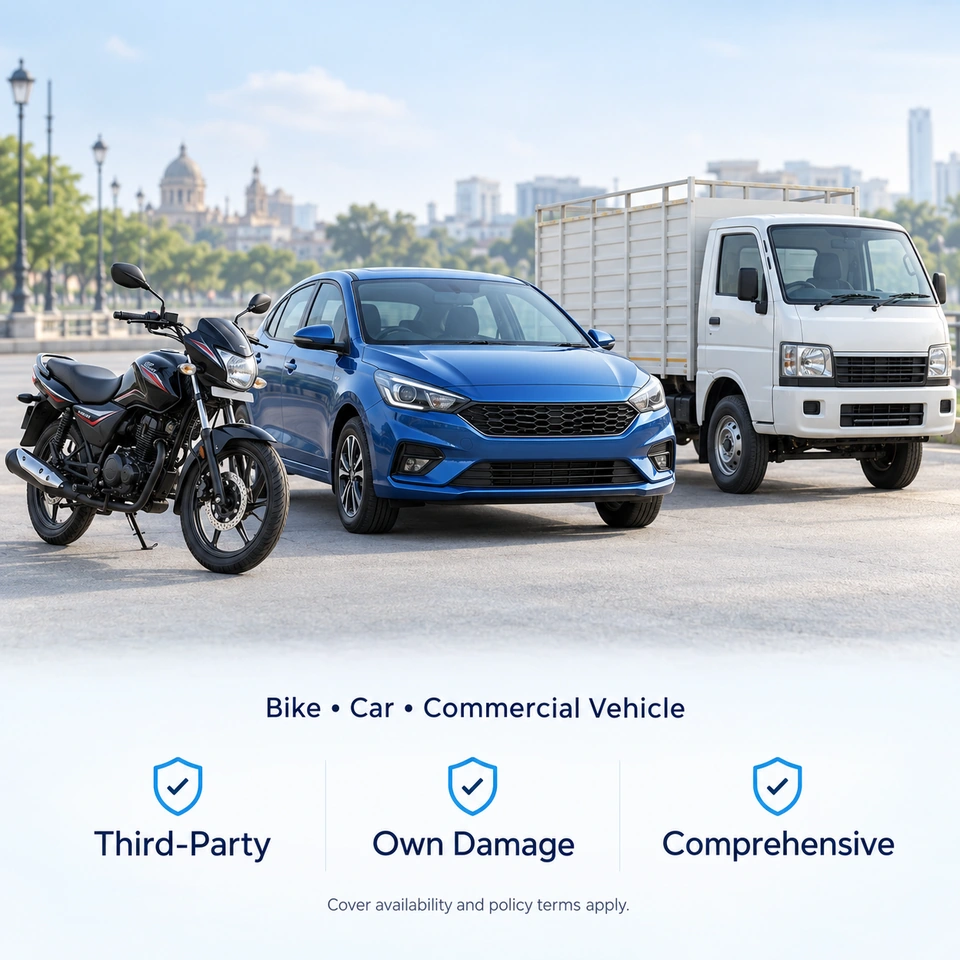
Mexora Money supports motor insurance assistance for bikes, cars and commercial vehicles through available providers. The exact product, eligibility, premium and coverage depend on the insurer and selected policy.
Three cover types at a glance
| Cover | Main purpose | Important distinction |
|---|---|---|
| Third-party liability | Covers specified legal liabilities to other people arising from use of the insured vehicle. | It does not provide own-damage cover for your vehicle. |
| Own damage | Covers loss or damage to the insured vehicle from covered events. | Standalone own damage does not replace the required third-party cover. |
| Comprehensive or package | Combines third-party liability and own-damage cover. | It still has conditions and exclusions; “comprehensive” does not mean every loss is covered. |
IRDAI explains the difference between liability-only and package policies in its motor insurance information. Third-party liability insurance is mandatory for vehicles plying on public roads in India. Check the actual policy wording for the scope of any cover.
When own damage and third-party dates differ
A customer may already have third-party cover and need to review own-damage protection separately. Read the policy schedule instead of assuming that every component expires on the same date.
HDFC ERGO’s standalone own-damage explanation describes own-damage protection separately from third-party liability. Its comprehensive cover explanation describes the combination of the two. These are educational references, not a claim that Mexora Money offers every product from that insurer.
Check the vehicle and its use
Begin with the registration details and vehicle category. Ask whether the customer is discussing a bike, private car or commercial vehicle. A commercial vehicle enquiry should be matched to a suitable commercial product rather than a private-car assumption.
Check that the applicant and vehicle details entered for the enquiry match the documents supplied. If something is unclear, resolve it before proceeding; correcting a misunderstanding is easier before a policy is issued.
For an existing policy, have the current schedule available so the relevant cover dates and details can be reviewed. Do not promise an immediate issue date or acceptance before the provider has completed its requirements.
Compare the policy, not just the price
When reviewing the available options, ask the customer to check:
- The vehicle and insured person’s details.
- The type of cover and its start and end dates.
- The stated insured value where applicable.
- The excess or deductible the customer may need to pay.
- Exclusions and any selected optional add-ons.
- The insurer’s claim reporting instructions.
For example, two quotes may have different add-ons or excess amounts. A lower displayed premium alone does not explain those differences. Ask for clarification of the relevant wording before the customer decides.
Set the right expectation at the counter
Your role is to help the customer understand the available options and complete the applicable process. Do not describe a quote as a claim approval, or promise that a future loss will definitely be paid.
After issue, encourage the customer to check the policy document and retain it. For any discrepancy, use the relevant provider’s correction process. Insurance cancellation and refunds follow the applicable policy and provider conditions; the recharge refund rules do not apply to an insurance policy.
Common questions
Does third-party cover pay for damage to my own vehicle?
It is different from own-damage cover. Review the cover type and policy wording to understand what protection has actually been purchased.
Does comprehensive mean there are no exclusions?
No. Read the exclusions, excess and selected add-ons. The product name is not a promise that every situation is covered.
Can I ask about bike, car and commercial vehicle policies?
Yes. Explore Mexora Money motor insurance assistance for supported options. Availability and issuance remain subject to the relevant provider and policy requirements.